Go and make disciples of all nations...
The Ascension Day and the Day of Pentecost
The Ascension Day
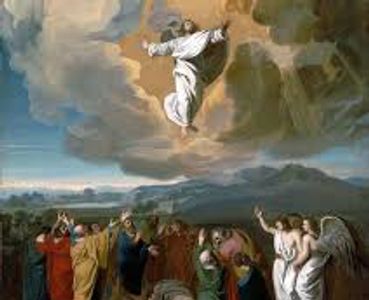
40 days after resurrection and 10 days before Pentecostal day is believed as Ascension Day, the day on which Jesus ascended into heaven. Easter always falls on Sunday and Ascension Day falls on a Thursday. 40 is a significant number in the Bible. Moses spent 40 years in the wilderness before the exodus of Israelites from Egypt. Elijah was prepared for his transition during 40 days before he made his way to Mount Horeb. Jesus Himself spent 40 days in the wilderness for His preparation before start of His ministry.
We read in the Bible (Acts 1:1-3), Jesus spent 40 days after He was raised from dead with His disciples which are significant for Christian believers. It was the last moment Jesus spent with His disciples, but it turned out to be the time of preparation for a great transition that happened on the day of Pentecost. Jesus met, ate and spoke to them on different occasions. His meeting with the disciples signifies His assurance that He was alive. (Luke 24:39; John 20:27) and He had been teaching and instructing them about life in the Kingdom of God.
Luke wrote about the ascension of Jesus in Acts 1:6-11,
“Therefore, when they had come together, they asked Him, saying, “Lord, will You at this time restore the kingdom to Israel?” And He said to them, “It is not for you to know times or seasons which the Father has put in His own authority. But you shall receive power when the Holy Spirit has come upon you; and you shall be [a]witnesses to Me in Jerusalem, and in all Judea and Samaria, and to the end of the earth.” Now when He had spoken these things, while they watched, He was taken up, and a cloud received Him out of their sight. And while they looked steadfastly toward heaven as He went up, behold, two men stood by them in white apparel, who also said, “Men of Galilee, why do you stand gazing up into heaven? This same Jesus, who was taken up from you into heaven, will so come in like manner as you saw Him go into heaven.”
This is the greatest hope of all Christians. Just as Jesus went into heaven, so will all believers and our lives would never be the same again.
The Day of Pentecost
10 days after Jesus Ascension - the 50th day, seven weeks after Easter Sunday is celebrated as the Day of Pentecost. The day is considered as the last day of Easter celebration by the Eastern Christianity. As per the Jewish festivals, this is considered as a harvest festival, fifty days after the second day of Passover.
Then, how is Pentecost celebrated by Christians? Read Acts 2
After Jesus’ Ascension, His disciples and followers gathered in Jerusalem and they were all in one accord in prayer and supplication in the upper room. And suddenly there came a sound from heaven, as of a rushing mighty wind, and it filled the whole house where they were sitting. They saw what seemed to be tongues of fire that separated and came to rest on each of them. All of them were filled with the Holy Spirit and began to speak in other tongues as the Spirit enabled them." The multitude came together, and were confused, because everyone heard them speak in his own language. So, they were all amazed and perplexed, saying to one another, “Whatever could this mean?” Others were mocking and said, “They are full of new wine.”
Here we saw Peter proceeded to preach his first sermon, explained to the crowd who Jesus was and the significance of what had happened to Him. He called on them to repent and turn to Jesus for salvation. That day witnessed 3,000 people believed and were saved and these believers in Jerusalem on that historic day were the “first fruits” of the great harvest.
In Exodus 32:22, we read "Celebrate the Festival of Weeks with the first fruits of the wheat harvest, ... "
Matthew 9:38, “Ask the Lord of the harvest, therefore, to send out workers into his harvest field.”
Lessons for us
1. We are called to be together, united in one mind, spirit and in action like the disciples
2. The harvest is plenty and we are dared to share the gospel because without evangelization, we can’t pick up harvest. We need to do our best.
3. The day of Pentecost is the reminder for follow up to be done by us as Jesus called us to proclaim the gospel before He was ascended into heaven.
Don’t be anxious! Be a harvester! God is with us.

The significant 50 days after resurrection of Christ
For believers, Easter is not just a single day but an extended season of 50 days feast, begins at sunset on the eve of Easter and ends with Pentecost, where we celebrate the gift of the Holy Spirit and the birth of the Church (Acts 2).
“Christianity is in its very essence a resurrection religion”, says Dr. John Stott. So, Easter season is more than an extended celebration of the resurrection of Jesus.
What’s the significance of these 50 days’ celebration?
After His resurrection, Jesus spent forty days on earth (Acts 1:4) meeting people sharing about Kingdom of God before he ascended into heaven.
1. Mary Magdalene and the three women
2. Simon Peter and the two men on the way to Emmaus
3. The disciples at different occasions
Then there were ten more days after that before the Day of Pentecost. Jesus gave them this command:
“Do not leave Jerusalem, but wait for the gift my Father promised, which you have heard me speak about. “Acts 1:4
“… you will receive power when the Holy Spirit comes on you; and you will be my witnesses in Jerusalem, and in all Judea and Samaria, and to the ends of the earth.” Acts 1:8
The celebration of the resurrection of Jesus finally led to the birth of the Church and its mission on the day of Pentecost.
What is the message for us during this season?
“…He is not here; he has risen, just as he said. Come and see the place where he lay. Then go quickly and tell his disciples: ‘He has risen from the dead and is going ahead of you into Galilee.”
Mathew 28: 6,7
“Come & See and Go & Tell”
Listen to the echoes of Easter that preceded and followed!
Simon of Cyrene – Compelled to Carry the Cross and Complied with
Simon of Cyrene – Compelled to Carry the Cross and Complied with
Simon of Cyrene – Compelled to Carry the Cross and Complied with

- Luke specifies that Simon carried the cross behind Jesus
- Simon literally followed Jesus that day.
- The verse “Whoever wants to be my disciple must deny themselves and take up their cross and follow me.” (Mark 8:34) signifies Simon’s action of carrying the cross.
- The Roman soldiers compelled him to carry the cross as Jesus was physically exhausted and wounded.
The Lesson
We learn about Christian discipleship from Simon’s act and his carrying the cross for Jesus has significance for our own spiritual journey. Let’s trust that the way of the cross is the path to resurrection itself.
Chief Priests – from being Honourable to Horrible
Simon of Cyrene – Compelled to Carry the Cross and Complied with
Simon of Cyrene – Compelled to Carry the Cross and Complied with
- Includes Caiaphas, the high priest and the Sanhedrin, the high council
- The most powerful religious leaders in Jerusalem and known as God’s chosen vessels
- They found Jesus as threat to their power because His followers were growing in number believing that He was the awaited Messiah
- Thirsted for Jesus’s blood and plotted His death for months
- Hammered a deal with Judas for thirty pieces of silver to hand over Jesus to them
- Poisoned the crowd to chant the words “Crucify Him” to Pilate
- Succeeded in the plot to get Jesus on the cross
The lesson
The priests never sensed that that they were vicious, but Jesus was victorious. Yet behind human conspiratorial action what stood was the will of God to provide an unquestionable sacrifice for our sins.
Judas – the Treasurer turned Traitor
Simon of Cyrene – Compelled to Carry the Cross and Complied with
- A tool of satan and was completely controlled by him
- Pawn of the religious leaders who used him to arrest Jesus
- Disappointed because his expectation of a worldly kingdom was not met
- Made a cheap bargain of 30 pieces of silver to betray his compassionate Master
- Did not understand the unwavering love for him even at the last Passover meal
- Used a cruel and deceitful act of kissing Jesus to deliver Him to the chief priests
The Lesson
Judas had walked with Jesus, yet stayed in darkness and missed an opportunity of entering eternity. It is written in Hebrews 6:6, “It is impossible to bring them back to repent again, because they are again crucifying the Son of God and exposing him to public shame.” This is true for people like Judas.
Peter – the chief Defender turned Despondent!

- Felt happy to walk with Jesus on the water
- Delighted when Jesus said, “I give you the keys to the kingdom of heaven.”
- Declared Jesus was the Messiah, the Son of the living God
- Defended Jesus bravely in the Garden of Gethsemane by striking the ear of Malchus
- Devastated to hear the penetrating crow of the rooster after disowning the Lord three times
- Wept bitterly when he remembered the word Jesus had spoken: “Before the rooster crows, you will disown me three times.”
The lesson
The one who confidently declared, “Even if all are made to stumble because of You, I will never be made to stumble” (Matt 26:33), denied his Lord not once, but three times. But Jesus said that He had prayed for him so that his faith wouldn’t fail. Despite his denial, he was one of the three closest companions to Jesus proving that mistakes do not disqualify believers from serving God.
The thief – his Faithfulness led to Forgiveness
Thomas – the Doubter who was Dumbstruck on seeing Jesus’s wounds
- He believed that Jesus was the King of the Kingdom beyond death
- “Lord, remember me when you come into your kingdom”, the words spoken with a tiny bit of faith
- Rebuked the man on the other side of him for ridiculing Jesus
- Surprised when Jesus said, “Today, you will be with me in paradise.”
- He rejoiced over Jesus’s immediate recognition of his repentance
- Received forgiveness, peace and hope for the future
The lesson
Trusting Jesus made all the difference for the thief. He learned the magic of faith which was the turning point of his life. “We know that God is always at work for the good of everyone who loves him. They are the ones God has chosen for his purpose.” Romans 8:28
Thomas – the Doubter who was Dumbstruck on seeing Jesus’s wounds
Thomas – the Doubter who was Dumbstruck on seeing Jesus’s wounds
- Didn’t understand Christ’s words when he said that He would go and prepare a place for us
- When Jesus was nailed to the cross, Thomas thought that He was gone forever
- Doubt covered him as he was thinking that the message of the resurrection was a hoax
- When the other disciples said that Jesus had appeared to them, he didn’t believe
- He said that unless he put his fingers in the nail prints on His hands, he wouldn’t believe what they said
- He was amazed when Christ called him by name and asked to put his fingers on the wounds
- He was dumbstruck and fell on his knees and said, “My Lord and my God”
The lesson
Jesus’s words to Thomas were a gentle rebuke. He said, “Because you have seen me, you have believed; blessed are those who have not seen and yet have believed.” John 20:29. The encounter with Jesus silenced him completely and changed his life. He became a faithful, fearless witness, spending his life spreading the gospel of Jesus Christ. Jesus is the living Lord of glory.
Caiaphas – the Priest but a Puppet for Annas, his father-in-law
Barabbas – a Criminal but became the Choice of the Crowd to be released!
Caiaphas – the Priest but a Puppet for Annas, his father-in-law
- He was the high priest when Christ was arrested
- Chose to do what others wanted rather than doing the right things
- He was called rude, sly and hypocritical like his father-in-la
- He was in the office as High priest but the power was in the hands of his father-in-law, Annas
- Knew about Jesus and heard that He was the Messiah
- Found out that all the stories were contradicted and the witnesses were false against Christ
- When Jesus answered that He was the Son of God, the crowd shouted at Him, “Blasphemer” and he had to agree with Sanhedrin as evidence
- Awestruck when he saw that Jesus did not move and was composed though everyone mocked and struck Him with fists
The lesson
Caiaphas knew well that when the initial trial was turning into fiasco, he was forced to follow the wishes of his father-in-law and please the chief priests. He lost the opportunity to rise to a higher sense of justice and close the case but condemn the innocent Nazarene. God offers chances to repent. Therefore, let us not miss the opportunities. Luke 13:6-9 describes a tree given one last year to bear fruit before being cut down, signifying a final chance to act.
The mob – Mocked and voiced the Murder of Jesus
Barabbas – a Criminal but became the Choice of the Crowd to be released!
Caiaphas – the Priest but a Puppet for Annas, his father-in-law
- This mob was full of hatred during the dreadful weekend
- The crowd that followed the priests, hurried to the Garden of Gethsemane with torches, clubs and swords
- They were not happy when Pilate said that he found no fault in Jesus
- Picked up the chant “Crucify Him” from the priests that was louder and sinister
- Shouted obscenities against Christ, hurdled jeers and taunts
- Ridiculed Jesus as He carried the cross
- Pleased with Jesus’s death which was painful
The lesson
Irrespective of the unpleasant behaviour of the mob, Jesus spoke towards Heaven, calling on His Father to forgive them. He answered the mob’s hatred with love and prayed for forgiveness after what had been done to Him. That is Jesus’s love.
Barabbas – a Criminal but became the Choice of the Crowd to be released!
Barabbas – a Criminal but became the Choice of the Crowd to be released!
Barabbas – a Criminal but became the Choice of the Crowd to be released!
- An obscure character in the Bible
- Deserved to die for his sins
- Known to be a notorious prisoner, waiting for his execution
- In a flash, he became the crowd’s favourite & preference and was set free
- One of the greatest swaps in the history – the sinless was swapped for a sinful person
The lesson
He is the person whose cross was carried by Jesus. In the same way, Jesus went to the cross for us.
“God made the one who did not know sin to be sin for us, so that in Him we would become the righteousness of God.” 2 Corinthians 5: 21.
Joseph of Arimathea - A Courageous man who took Custody of Jesus’s body
Joseph of Arimathea - A Courageous man who took Custody of Jesus’s body
Barabbas – a Criminal but became the Choice of the Crowd to be released!
- A secret follower of Christ and was convinced that He is the Messiah, Son of God
- Admired Jesus and the more he listened to Him, the more he believed
- Waited for the Kingdom of God that would wipe out the Roman invaders
- He was not courageous but fearful that Sanhedrin would know his faith
- Brave enough to make a request to Pilate to take the custody of the body of Jesus
- Carried Jesus’s body to his family tomb and buried Him
The lesson
By taking the bold decision at the end, he made known to the world that he was a believer. He understood that Christ had died for him and decided to live for Him. We can witness a trio that had worked here - Joseph, Nicodemus and the Roman Centurion, all whom were secret believers. God uses ordinary people to do extraordinary things.
Mary Magdalene - the first to See and Speak to the risen Christ
Joseph of Arimathea - A Courageous man who took Custody of Jesus’s body
Mary Magdalene - the first to See and Speak to the risen Christ
- Hung out with Jesus frequently as He had changed her life
- Loved and worshiped the Saviour in her heart endlessly
- Wept unconsolably watching the happenings at Calvary
- Shocked to see the stone rolled away from the tomb and that were no guards
- Puzzled and surprised to see two angels who reminded that Jesus was risen
- When everyone ran away from the scene, she chose to remain near the tomb
- Rejoiced to hear the voice of Jesus calling her by name
- Became the first to take the news of the resurrection to the world
The lesson
Mary’s loyalty and devotion show us a journey of faith. Her hope is always on Christ irrespective of any situation in life.
“For we live by faith, not by sight.” (2 Corinthians 5:7)
Cleopas – Amazed and Awestruck to witness the risen Christ
Joseph of Arimathea - A Courageous man who took Custody of Jesus’s body
Mary Magdalene - the first to See and Speak to the risen Christ
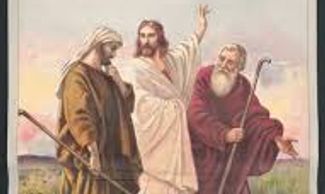
- He was one of the travellers who began the journey to Emmaus with no hope
- Encountered a stranger on the way without realising that He was the resurrected Christ
- Shocked when He witnessed the crucifixion and death of Jesus
- Though he heard about the resurrection of Christ, he couldn’t believe it as he knew about many rampant rumours in Jerusalem
- Discussed extensively about the happenings in Jerusalem with Jesus Himself
- Even after walking with Christ and listening to His teaching, he never recognised Him
- Dumbfounded to see the nail prints when He took the bread and his heart began to thump while looking at His gentle eye
- He was an eye witness to the resurrected Christ and he affirmed that Jesus was alive
The Resurrection of Jesus Christ is the foundation of the Christian faith. Walking and dining with Jesus changed everything for Cleopas and he confirmed that He is the Son of God. Let us walk with Jesus and renew our faith and hope in Christ.
Easter – from Anxiety to Amazement to Acquire Peace and Joy!
His disciples, followers, family and friends were too afraid to do anything.
“The women were shaking and confused. They went out and ran away from the tomb. They said nothing to anyone, because they were afraid.” Mark 16:8
The guards were so afraid of Him that they shook and became like dead men. Matthew 28:4
So, the women hurried away from the tomb. They were afraid, but they were filled with joy. Matthew 28:8
Looking at the death of Jesus, His disciples, followers, family and friends, believed that is the end and went to the tomb on the third day with spices and perfumes for His body forgetting His promise that he would rise from dead.
The empty tomb gives us HOPE, LOVE and LIFE. Isn’t it wonderful?
Jesus said, “I am the resurrection and the life. Those who believe in me, even though they die, will live and everyone who lives and believes in me will never die” (John 11:25).
The Call on Easter Sunday - Look at Saviour’s Sacrifice and believe in His Glorious resurrection.
May our Risen Lord and Saviour Jesus Christ bring us love, hope, peace and life.

If you declare with your mouth, “Jesus is Lord,” and believe in your heart that God raised him from the dead, you will be saved.
Romans 10:9

Meet this Roman Centurion!
from a voice of authority to voice of affirmation
Centurion's AUTHORITY!
A non commissioned officer with about a hundred men under his command. An impressive job in the Roman army.
Centurion's ASTONISHMENT!
When he arrived at the garden of Gethsemane, Jesus came forward and asked whom you were seeking and their informer Judas stepped forward and kissed Jesus which was the signal . The centurion got confused and wanted to confirm. He then asked, "Jesus of Nazareth?" Jesus replied, "I am He" . He was astonished and understood that there was something different about Jesus.
Centurion's AFFIRMATION!
He didn't really believe that Jesus was the messiah. But the events in the garden of Gethsemane & Calvary and through the cross , he came to know that Jesus was truly the son of God.
CENTURION'S AWESTRUCK Statement!
With Inexpressible wonder, "when the centurion, who stood there in front of Jesus, saw how he died, he said, “Surely this man was the Son of God!” Mark 15:39
What is our voice?

The Lenten season - 2026
This Lenten season – another chance to Reflect & Refocus!
Lenten days in a Christian life are special and believed to be a self-reflective season which could be overlooked sometimes. We need a purposeful and realistic reflection as our life moves at a rapid speed and gets too busy at times. Ponder on the following…
- Identify the idols that we usually turn to for comfort (social media, shopping, friends) and try to replace that with a reliance on God.
“But I wipe away your sins because of who I am. And so, I will forget the wrongs you have done.” Isaiah 43:25
- Introspect if our sacrifices are to show off or genuine, as Lent is a time to move from conservation (of unacceptable practices) to transformation (of renewed mind)
“Do not be conformed to this world, but be transformed by the renewal of your mind, that by testing you may discern what is the will of God, what is good and acceptable and perfect.” Romans 12:2
- Include and focus on "taking on" habits that foster patience, humility, gentleness, kindness and move beyond "giving up" items…
“Humble yourselves, therefore, under God’s mighty hand, that he may lift you up in due time.” 1 Peter 5:6
Jesus is ready to offer forgiveness and another chance to look into eternity.
“But you must return to your God; maintain love and justice, and wait for your God always.” Hosea 12:6

Lenten Season –Why do we observe?
Is there a Spiritual Connection?
This year, we start this season from February 14, Ash Wednesday and it ends on March 30, Holy Saturday. The last week of the season is observed as Holy Week starting from Palm Sunday until Holy Saturday. The 40-day period before Easter is a reminder of the events leading to and magnitude of Jesus's sacrifice. Apart from fasting, prayer and abstaining from some foods and luxuries, some use this time for introspection, repentance, and spiritual growth.
So, how can we truly engage ourselves during this season?
1. Engage in thoughtful fasting. Apart from fasting from all food once a week or daily, consider fasting from social media, fasting from some bad behaviours such as complaining, anger, rude, being selfish, disobedience, impoliteness and so on.
2. Evolve a new practice. Fasting is good. As we miss out some meals or abstain specific foods, try to start a new practice daily like showing an act of kindness to some needy, evangelising to new community, praying for specific needs – country, Church or some known community and meditating on the word of God.
3. Engross in conventions, spiritual meetings and bible studies conducted by Churches during this season to deepen our connection with God and to reflect on the sacrifice of Jesus on the Cross.
Above all, bring your own creativity to reflect and rejuvenate during this season. That will be a perfect preparation for the big celebration of Resurrection Day.

The Power of Prayer (to contemplate during Lenten Season)
"Whether we realize it or not, prayer is the encounter of God's thirst with ours. God thirsts that we may thirst for him." — St. Augustine
This season is considered as a time of deepening our relationship with God. Prayer is believed to be one of the pillars of Lent during the 40-day journey where repentance and renewal is emphasized. The prayer doesn’t stop here but it’s seen as a way to connect with God constantly and reflect on Jesus' sacrifice. It's a time for self-reflection as well in order to make our lives with God's will.
Praying for others is an emotional support and help for our loved ones during their difficult times and at times of their dire needs. Remember the words of the Lord Jesus, ‘It is more blessed to give than to receive.’ It’s one way of giving i.e., giving our precious time for others. “Carry each other’s burdens, and in this way, you will fulfil the law of Christ.” Galatians 6:2. As we pray, nothing should be expected in return. God will definitely take care of our needs as well. Prayer is a kind of ministry, where we are strengthened in God. So, it need not be done for recognition.
When we pray for others, our relationship with God become closer and we become humble and selfless.
“Do not be anxious about anything, but in every situation, by prayer and petition, with thanksgiving, present your requests to God.” Philippians 4:6
We understand that Lent is a time for prayer and reflection. During this season, we pray for God's mercy and guidance as they strengthen our relationship with Him.
Let’s walk through this season removing all distractions that take away God’s glory so that we experience God’s goodness and mercy in new ways.
Maundy Thursday – why do we observe it?
1. On this day, we could see the very basic foundation of Christian life. “LOVE” reached a new standard. Jesus changed the definition of love where He gave a new commandment to the disciples.
“A new commandment I give to you, that you love one another: just as I have loved you, you also are to love one another" (John 13:34)
2. Jesus instituted the sacrament of Holy communion to remember His broken body and His shed blood.
“And he took bread, gave thanks and broke it, and gave it to them, saying, “This is my body given for you; do this in remembrance of me.” In the same way, after the supper he took the cup, saying, “This cup is the new covenant in my blood, which is poured out for you”. (Luke 22:19,20)
3. By reflecting upon this action of Jesus where He showed them the humility by washing their feet, we remember the selfless sacrifice of Jesus and we are called to lead a servant leadership.
“So he got up from the meal, took off his outer clothing, and wrapped a towel around his waist. After that, he poured water into a basin and began to wash his disciples’ feet, drying them with the towel that was wrapped around him.” (John 13: 4,5)
Every year, we recollect the events happened, the last supper, His heartfelt prayer at Gethsemane and the betrayal of Judas.
But do we observe these commandments or do we just remember the events happened year after year?

Palm Sunday – from Significance to Success
Palm Sunday is remembered as a day to mark Jesus’s triumphal entry into Jerusalem where the enthusiastic crowds were greeting by waving palm branches. It’s mentioned in the four gospels and also the beginning of the holy week. The palm branches symbolize the ones placed in front of Christ as he entered Jerusalem in a colt.
The coming of Zion’s King is prophesied by Zechariah in his book. (9:9)
Rejoice greatly, Daughter Zion!
Shout, Daughter Jerusalem!
See, your King comes to you,
righteous and victorious,
lowly and riding on a donkey,
on a colt, the foal of a donkey.
The crowds that went before him and that followed him were shouting, "Hosanna to the Son of David! Blessed is he who comes in the name of the Lord! Hosanna in the highest!". (Matthew 21: 9)
The Significance
1. The palm branch symbolizes victory i.e. the final victory of Jesus on the cross and our surrender to God
2. The donkey symbolizes humility & peace and reminds us that Jesus is the Prince of Peace
3. "Hosanna!" means hailing Christ as King
The Success
Palm Sunday reminds us the reign of Christ and His ultimate sacrifice for mankind. Those who greeted Him were convinced that He was the Messiah. He didn’t come into this world to set up a new political system, instead He came to change our hearts and save us from our sins by His death and resurrection. As we remember the significance of Palm Sunday, let us not forget that we are nothing more than redeemed sinners and that is the success of the Palm Sunday.
Where are we on this Palm Sunday? With the disciples who welcomed Him or the cynical crowd?
Wave the palms to move our hearts to prepare for Jesus’ return

Meet the most devious character!
Pontius Pilate – the powerful guy remembered for the encounter with Jesus!
I officiated the trial of Jesus and ordered the crucifixion being the Roman Governor of Judea.
But truly I was reluctant to execute Jesus and tried my best to free Him. My conscience was bothering me especially when my wife was warning that He was innocent. (“Don’t have anything to do with that innocent man, for I have suffered a great deal today in a dream because of him” - Matthew 27:19).
I was confused about the truth and asked the Righteous Judge of the world, “What is truth?” (John 18:38)
Finally, I made a compromise with Jewish leaders and people, knowing very well that Jesus had been handed over out of envy. I appealed to the crowds asking whom should be set free, Jesus or Barabbas? But the leaders influenced the crowd to shout for Barabbas (Matthew 27:20–21).
The situations and the political pressure made me to authorize both flogging and crucifixion of Jesus. “Wanting to satisfy the crowd, Pilate released Barabbas to them. He had Jesus flogged, and handed him over to be crucified” (Mark 15:15).
What do we observe about Pilate here?
1. He boldly declared Jesus as innocent three times
2. Pilate had heard of Jesus miracles and knew His reputation
3. His personal meeting with Jesus was for a few moments, but he sensed that Jesus was not an offender
What went wrong with Pilate?
1. He disregarded his conscience and ignored the advice of his wife
2. He goes so far as to release a murderer and condemn an innocent man, just for the sake of his political ambitions
3. Unlike the centurion at the cross, he failed to recognize the saviour standing right before him
4. He pleased the crowd and lost the opportunity to accept Jesus claims
5. He knew what was right but got pressurised to make wrong decision. Later, he even grants the leaders’ request of assigning guards to Jesus’s tomb
Takeaways from Pilate’s life
1. God gave many choices to Pilate. But he ended up making the wrong choice although it fulfilled God’s plan
2. More evil happens when truth is at the mercy of people who are prone to succumbing under external pressures and avoid making the hard decisions
3. A person who resists the truth would be the one without any purpose or direction
4. God gives opportunity for everyone if you are a Jew or Gentile. Pilate’s wife was able to find who Jesus was
5. Everyone is responsible for the choices we make, but would face the consequences of sinful ones on the day of judgement
In such situations, would you stand for God or follow Pilate’s path?